


Paul Hammel / Nebraska Examiner
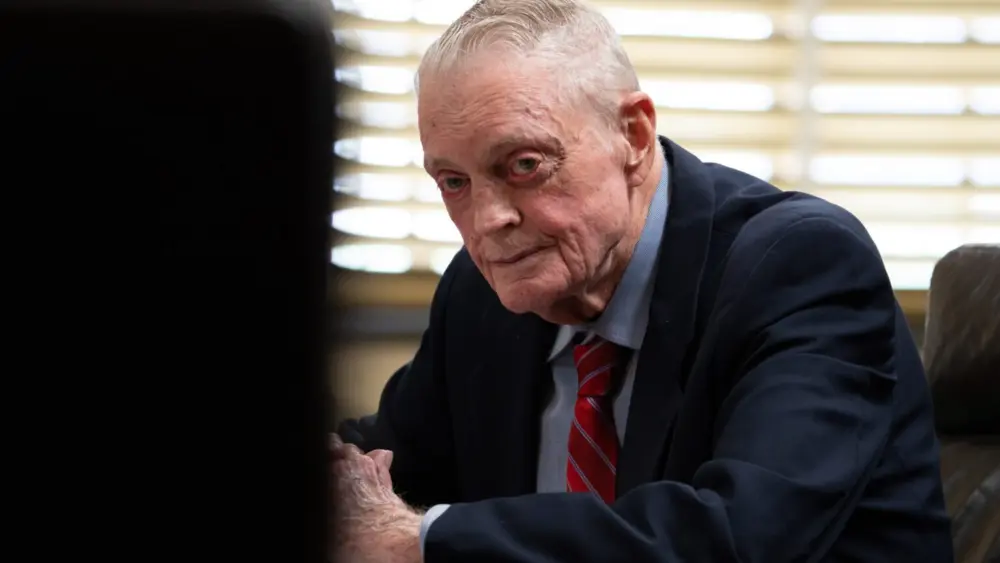
Kyle Kinney of Boys Town, left, and Gov. Pete Ricketts, urged Nebraskans on Wednesday to be proactive about preventing suicide.
—
Paul Hammel
Nebraska Examiner
Nebraska’s suicide prevention “lifeline” is moving to a new, simpler, three-digit number — 9-8-8 — on Saturday as part of a nationwide effort to make help easier to access during a mental health crisis.
The 9-8-8 number will eventually replace the state’s current suicide crisis line, 1-800-273-TALK (8255).
At a press conference Wednesday, Gov. Pete Ricketts and other officials said the easier-to-remember number will also allow a connection to all of the crisis intervention teams that are deployed statewide to counsel and aid persons facing a mental health crisis.
Be proactive
Ricketts and others urged Nebraskans to be proactive and listen to their relatives, friends and neighbors for signs of depression, isolation or contemplation of suicide to and help them get help.
“We know that it can be hard to start conversations about mental health, but they are very important conversations and could save a life,” said Sheri Dawson, director of the Division of Behavioral Health at the Nebraska Department of Health and Human Services.
But Ricketts said he would oppose changes in gun laws to help prevent suicides. According to national vital statistics from 2020, 53% of all suicides were committed with a firearm.
To prevent suicides and mass shootings, 19 states and the District of Columbia have enacted “red-flag” laws, which allow a judge to order the temporary confiscation of guns from a person deemed to be a threat to themselves or others.
The Centers for Disease Control says that 85% to 90% of suicide attempts with firearms are fatal, and suicide prevention groups maintain that many lives could be saved if a person in crisis didn’t have access to a gun, either by locking up weapons or taking them away.
Ricketts: Gun law changes not needed
Ricketts said we need to be “proactive” about the causes of suicide, and he said the new 9-8-8 number will aid in that.
“I don’t see a need to change gun laws,” he said. “We need to focus on behavioral health and mental health.”
Suicide rates have been climbing nationally, and in 2018, 14.2 people per 100,000 died by suicide, according to the CDC, the highest rate in more than 30 years.
Nebraska had the 34th highest suicide rate among the states, at 14.7 per 100,000 people, in 2017. That was the lowest among all of Nebraska’s neighboring states. Montana had the highest suicide rate, 28.9 per 100,000.
Rise in crisis line calls
Still, the free and confidential calls to the Nebraska’s current suicide crisis line have increased by 16% during the first six months of 2022 over the same period in 2021, said Kyle Kinney, program manager at Boys Town, which has staffed the hotline since 2005.
He blamed social media, opioid addiction and social upheaval for the increase.
Kinney said that last year, the state’s lifeline received 8,777 calls, of which 97% resulted in de-escalation over the phone. Calls to Nebraska’s Family Helpline (1-888-866-8660) have doubled in recent years, he said.
Ricketts said Nebraska has been successful in its suicide prevention efforts, which include training “mobile crisis response teams” available round the clock to help those in crisis. U.S. News and World Report, he said, ranks Nebraska as fourth best in the nation for mental health care.
More services needed
Dawson said that while the state’s efforts get good grades, Nebraska has an ongoing challenge in developing more treatment options for mental health, including providing “same day, open access” evaluations of those in crisis.
Ricketts pointed out that the state, through President Biden’s American Rescue Plan Act, invested $40 million of its ARPA funds to expand behavioral health care capacity. The Legislature also allocated $60 million for a new rural health complex at the University of Nebraska at Kearney and set aside funds to repay loans of students training to provide behavioral health care.
The state last month launched an initiative to reduce suicide by military veterans, as well.
Dawson said the state spends about $4.7 million a year for its current suicide prevention hotline and the family helpline. About $3.1 million a year is spent on the crisis intervention teams, which served 1,919 people during fiscal year 2020-21.