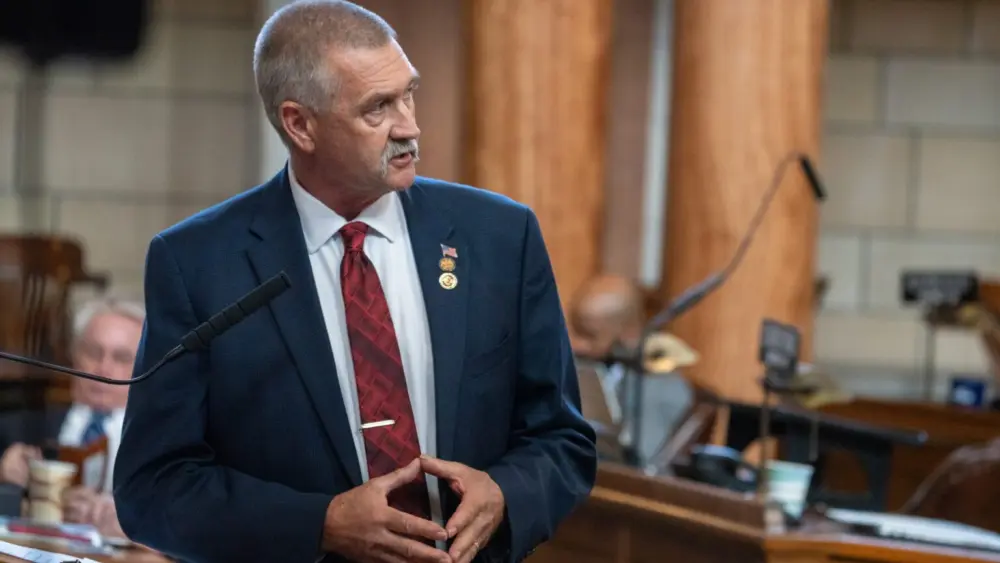
Les Leech believes a potential legislative bill could do more harm to meatpacking employees than protect them.
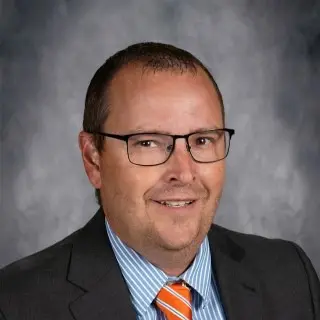
Leech, the president of Fremont Beef, said LB241 is a bad idea.
“It is poorly crafted,” he said. “It didn’t take into account any true science, and it left out a lot of important things that could’ve been in that would do the same thing.”
The bill, introduced by Senator Tony Vargas of Omaha, would require meatpacking plants in Nebraska to maintain six-foot distance between workers, provide personal protective equipment, hand washing stations, regular equipment cleaning, temperature checks, paid sick leave for those who contract COVID-19 and more information on case numbers.
Jessica Kolterman, director of corporate and external affairs of Lincoln Premium Poultry, said there are obvious problems with the proposal.
“I think, while the bill is well-intentioned, it has a very narrow application,” she said. “One of the concerns from us is that food processing is not the only workplace in America where people are in close proximity to each other. There is an element, as an industry, where you kind of feel singled out.”
Leech agrees.
“There are a lot of other industries in the state of Nebraska that house over 1,000 employees under one roof,” he said. “There are a lot of large employers that this bill doesn’t even take into account, so why just meatpackers?”
Leech said the social distancing component is a major drawback.
“The biggest issue that any manufacturer is going to have is the six-feet radius amongst all employees everywhere in the facility,” Leech said. “That is impossible. Fremont Beef Company has used masking, barriers — whether made out of plexiglass or made out of other materials — to separate employees that can’t be distanced by six feet. We use employee training, education on how they should conduct themselves out of work. We’ve always had extreme sanitation measures for employee hygiene and also all contact surfaces before the pandemic so that wasn’t a big issue at all.”
Kolterman also said the social distancing factor would impact business.
“It is not consistent with the current CDC (Centers for Disease Control) guidance, and ultimately if you were going to have a piece of legislation that prohibits anyone from being within six feet of each other within a workplace, I don’t think any workplace would be able to operate. It is not that the people are always consistently within six feet of each other, but there are times that they are.
“There are just a lot of problems with the language of the legislation and ultimately it adds another layer of bureaucracy when following CDC guidance and operating … under OSHA guidance, would really in effect, have the same impact.”
Leech said Fremont Beef’s current safety measures have been effective.
“In the last six months, our COVID-19 rate is 40 percent of the state rate and 50 percent of the national rate,” he said. “We’re actually safer here than the rest of the state.”
If Vargas’ bill would pass, it would affect the daily operations at Lincoln Premium Poultry and Fremont Beef.
“Certain aspects of our plant would not be able to operate if a piece of legislation like this were to go into effect,” Kolterman said. “There are certain parts of the facility — not all — but certain areas where we’ve used barriers rather than a six-foot distance or, obviously, masks and face shields.”
Leech said it could also affect the number of employees at Fremont Beef.
“Is there something that maybe the crafters of this bill want to do? Do they want to get rid of meatpackers in Nebraska? Do they want to get rid of agriculture?” he said. “And are they anti-employee because their suggestion on how to get this six-foot radius is to basically reduce the number of employees in your facilities.”
Vargas introduced a similar proposal to the Legislature last year, but it was blocked in the final days of the 2020 session. Leech hopes it suffers a similar fate in 2021.
“This is all some kind of political posturing for the author and the co-signers to get their name in the news,” he said. “That is all I see it as. It is not going to do the employee any good. It is only going to damage the economy in Nebraska and hurt employees, who this bill is supposed to be protecting.”
Kolterman said employee safety is always at the forefront at LPP.
“I certainly appreciate the idea of wanting to protect our team members,” she said. “Everybody is on board with that. There is nothing more important to us, but I’m not sure legislation is the way to do that.”